
Loading...
Serving Mobile, AL and surrounding areas. (251) 481-6274
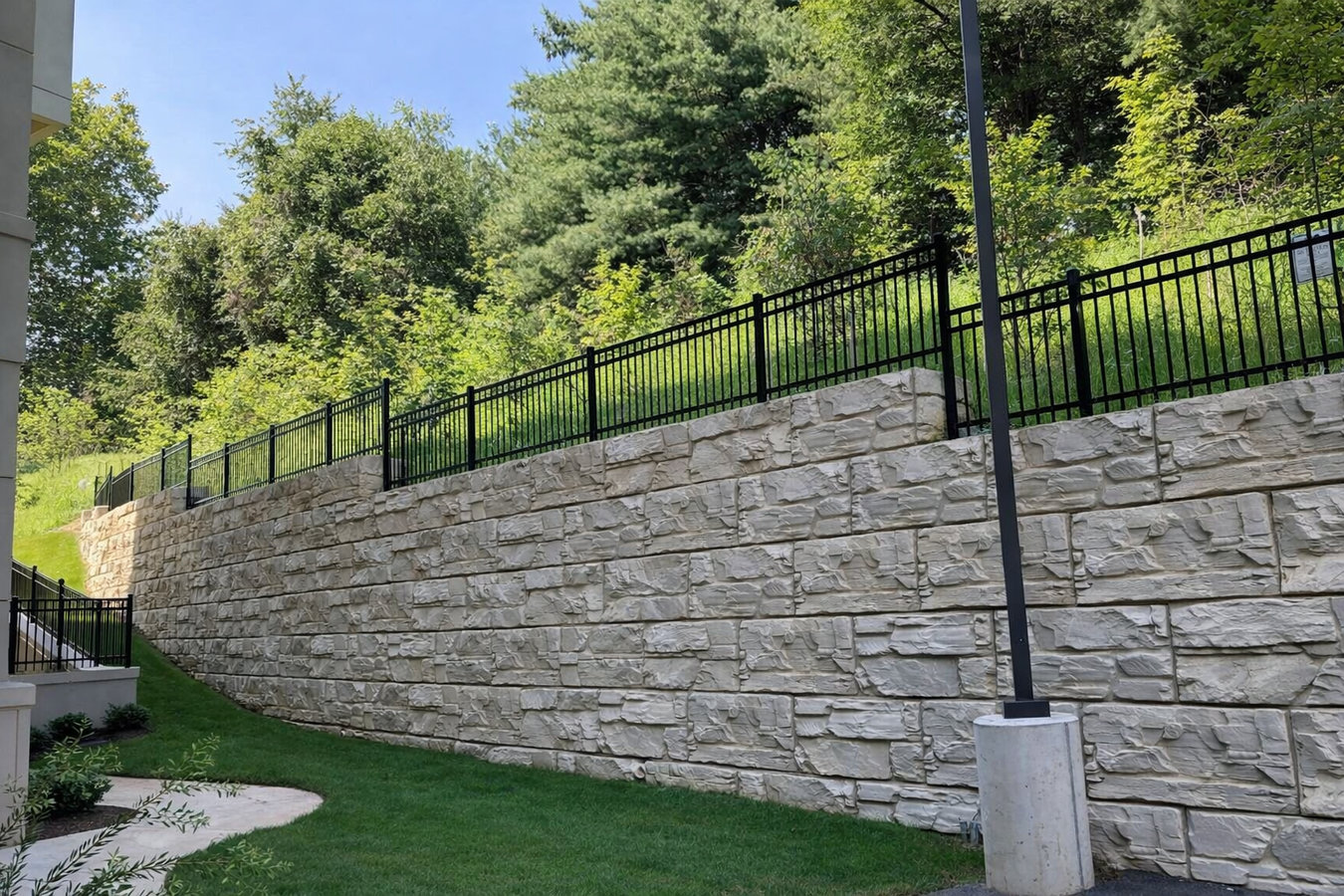
Soil washing away every time it rains, slopes you cannot use, and drainage pushing water toward your home - a properly built retaining wall solves all of it permanently.
Retaining wall construction in Mobile holds back soil on sloped or uneven ground using concrete block, natural stone, or poured concrete - most residential walls measuring 20 to 40 feet long take two to five days to complete, and walls over four feet tall require a city permit before work begins.
If soil is washing away from a slope in your yard after every rain, or if an older wall has started to lean or crack, the problem will not fix itself. Mobile's combination of heavy rainfall and clay-heavy soil puts more pressure on a retaining wall than most places in the country, which is why drainage planning is built into every job we do here.
Homeowners who need help with more than just slope control often pair retaining wall work with other masonry projects. If you are looking at a larger property improvement, our masonry restoration service handles aging brick and block structures that need repairs alongside the new wall.
If bare patches keep appearing on a slope in your yard after heavy rain, or mulch and topsoil keep washing toward your house or driveway, that is erosion in progress. Mobile's intense rainfall makes this a common problem, and it tends to get worse every season without intervention. A retaining wall stops the cycle by holding the soil in place permanently.
Walk around the perimeter of your house and look at how the ground slopes. If the soil tilts toward your foundation rather than away from it, every rainstorm is directing water toward your home. In Mobile, where rain comes frequently and heavily, that moisture pressure adds up over time. A retaining wall combined with proper grading redirects water away and protects your foundation.
If an older retaining wall on your property has started to tilt forward, developed visible cracks, or has gaps opening between sections, it is under stress it can no longer manage. Leaning walls do not self-correct - they continue to move until they fail, often collapsing during a heavy rain event. Catching this early gives you options; waiting turns it into an emergency.
Many Mobile lots - especially in hillier areas like Spring Hill - have slopes that are too steep to mow comfortably or use for a patio, garden, or outdoor seating area. A retaining wall lets you carve out a level, usable space by holding back the uphill slope. It turns otherwise wasted ground into something your household can actually enjoy.
We build new retaining walls from scratch - excavating the base, compacting the footing, building the wall in courses, and installing drainage aggregate and perforated pipe behind it as we go. The drainage layer is not an optional add-on; it is the part of the job that determines whether your wall is still standing straight five Mobile storm seasons from now. We work in concrete block, natural stone, and poured concrete depending on what suits the site and your budget. Walls over four feet tall that require a city permit are no problem - we handle all the paperwork and are present for the city inspection. For homeowners who need structural block walls that serve both a structural and privacy function, concrete block walls are a natural complement to retaining work on the same property.
We also repair and rebuild existing walls that have started to lean, crack, or separate. Sometimes the fix is lifting and resetting individual sections with new drainage behind them; sometimes the wall needs to come down and be rebuilt correctly from the footing up. We will tell you honestly which situation you are in after looking at the wall in person - and we will not recommend a full replacement when a repair is the right answer.
Best for homeowners dealing with erosion, slope instability, or drainage toward the foundation who need a permanent, permitted solution.
Best for homeowners with an existing wall that is leaning, cracking, or failing due to inadequate drainage behind it.
Best for steep lots where a single tall wall would require heavy engineering - multiple shorter tiers spread the load and create usable terraced areas.
Best for homeowners who want to solve an erosion problem and finish the project with usable outdoor space at the same time.
Mobile gets more than 65 inches of rain per year - more than Seattle, more than Miami - and that volume of water is the single biggest factor in how a retaining wall here needs to be designed. Water that cannot escape from behind a wall builds up hydrostatic pressure that eventually pushes the wall outward, no matter how solid the face looks from the front. Every wall we build in Mobile includes gravel backfill and drainage pipe behind it so water moves through and away rather than accumulating. This is not an upgrade - it is the minimum that makes sense in this climate.
The clay-heavy soil that underlies most of Mobile and the surrounding area adds another challenge. Clay absorbs water and swells, then shrinks back when it dries - a cycle that puts constant pressure on the back of any retaining wall. Homeowners in Mobile and in nearby Saraland deal with these conditions year-round. The right backfill material and properly compacted base work are not shortcuts you skip to save money - they are what separates a wall that lasts 30 years from one that starts to lean after three rainy seasons.
Reach out by phone or through our contact form and we will respond within one business day. The first conversation is brief - just describe what you are dealing with, whether that is a slope, an eroding area, or an old wall that is starting to move.
We come out, walk the site, and look at the slope, drainage patterns, and existing conditions. A written estimate follows - it covers labor, materials, drainage work, and any permit fees. You will know what everything costs before we ask for a decision.
If your wall requires a city permit - common for walls four feet or taller in Mobile - we handle the application and submit the plans to the city. Permit approval typically takes one to two weeks, so we factor that into the project schedule upfront.
The crew excavates the base, builds the wall in courses with drainage installed behind it, then backfills and grades the surrounding soil. If a permit was required, we schedule the city inspection and are present for it. You receive a copy of the passed inspection for your records.
Free on-site estimate. Written quote covering all costs before work begins. We respond within one business day.
(251) 481-6274Every retaining wall we build includes gravel backfill and drainage pipe installed behind the wall as it goes up - not left out to save money and not treated as an optional upgrade. In Mobile, where rain comes constantly and clay soil holds water, this is the difference between a wall that lasts and one that leans.
For walls that require city approval, we handle every step - application, plan submission, scheduling the inspection, and being present when the inspector comes. You get a copy of the passed inspection at the end. No paperwork falls on you.
We hold an active license with the Alabama Licensing Board for General Contractors and carry full liability coverage. That credential matters when a wall is structural - you have recourse that unlicensed operators cannot provide.
We have worked on properties across Mobile County - from older lots in Midtown and Spring Hill with decades of soil movement to newer suburban lots in west Mobile. We know what the local soil and drainage conditions demand and build accordingly on every job.
Our track record in Mobile is local and verifiable. Ask us for references from projects in your neighborhood and we will connect you with homeowners who can speak to the quality of the work.
The National Concrete Masonry Association (NCMA) publishes design standards for segmental retaining walls that professional contractors follow when sizing walls, footings, and drainage systems.
For permit requirements in Mobile, contact the City of Mobile Building Department to confirm current height thresholds and submittal requirements for your specific project.
For background on retaining wall construction and best practices, the Mason Contractors Association of America (MCAA) is a national trade organization that sets professional standards for masonry contractors.
Restore aging brick and block structures on the same property where a new retaining wall is being built.
Learn moreAdd structural block walls for privacy or property boundaries alongside retaining wall work.
Learn moreSpring booking slots fill fast - reach out now to lock in your project before Mobile's rainy season arrives.