
Paver Walkways & Driveways
Beautiful, durable hardscapes that stand up to Mobile's weather and heavy use.
Why Pavers Beat Concrete Every Time
When you need a new walkway or driveway, you basically have two choices: poured concrete or pavers. Concrete is cheaper upfront, but pavers give you way more value over the long run. Let's talk about why.
Concrete cracks. That's not a maybe, it's a guarantee. Temperature changes, ground settling, tree roots, and normal wear all cause concrete to crack. Once it cracks, your options are limited and expensive. You can patch it, but patches always look terrible. Or you can replace the whole section, which costs almost as much as starting fresh.
Pavers, on the other hand, flex with ground movement instead of cracking. They're designed to move slightly as the ground underneath shifts. If you ever need to access utilities below, we can pull up pavers, do the work, and put them back without anyone being able to tell. Try that with concrete.
Plus, pavers look better from day one. You get endless design options with colors, patterns, and borders that give you real curb appeal. A paver driveway or walkway makes your home look more expensive and well-maintained. That matters when it's time to sell.
Design Options That Match Your Style
Here's where pavers really shine. You have more design flexibility than almost any other hardscape material.
Colors and Textures
Modern pavers come in dozens of colors, from classic brick reds and earth tones to contemporary grays and charcoals. You can stick with one color for a clean look or blend multiple colors to create depth and visual interest. Textures range from smooth and modern to tumbled and aged, depending on the vibe you want.
For Mobile homes, we often see homeowners choose colors that complement their brick or siding. Warm tones work great with traditional styles, while cooler grays pair beautifully with modern exteriors. We'll bring samples to your property so you can see how different options look in your actual lighting.
Patterns and Layouts
Pattern choice makes a huge difference in the final look. Running bond (like a brick wall turned sideways) is classic and timeless. Herringbone creates a more formal, upscale appearance and actually makes pavers more stable under heavy loads, which is perfect for driveways. Basket weave gives you a traditional look, while random patterns create a more natural, casual feel.
You can also add borders in contrasting colors or soldier courses (pavers turned perpendicular) to frame your walkway or driveway. These details don't cost much extra but make your project look custom and high-end.
What Makes Pavers Perfect for Mobile, AL
- •Handle our freeze-thaw cycles without cracking like concrete does
- •Excellent drainage prevents water pooling during heavy afternoon storms
- •Stay cooler underfoot during hot Alabama summers compared to asphalt
- •Won't fade in direct sunlight thanks to through-body color technology
- •Individual pavers can be replaced if damaged, unlike concrete slabs
- •Resist oil stains better than concrete and clean up more easily
Professional Installation That Lasts Decades
The difference between a paver project that looks great for 30 years and one that starts failing after five years comes down to what happens below the surface. Most homeowners never see this work, but it's absolutely critical.
We start by excavating to the proper depth, usually 8-12 inches for walkways and 12-16 inches for driveways. This gives us room for a solid base that won't settle or shift. We grade everything for proper drainage, because standing water is the enemy of any hardscape project.
Next comes the base material, typically crushed limestone or gravel. We install this in layers, compacting each layer with professional equipment. This isn't something you can do by hand or with a rental compactor. We use plate compactors that weigh hundreds of pounds and create a rock-solid foundation.
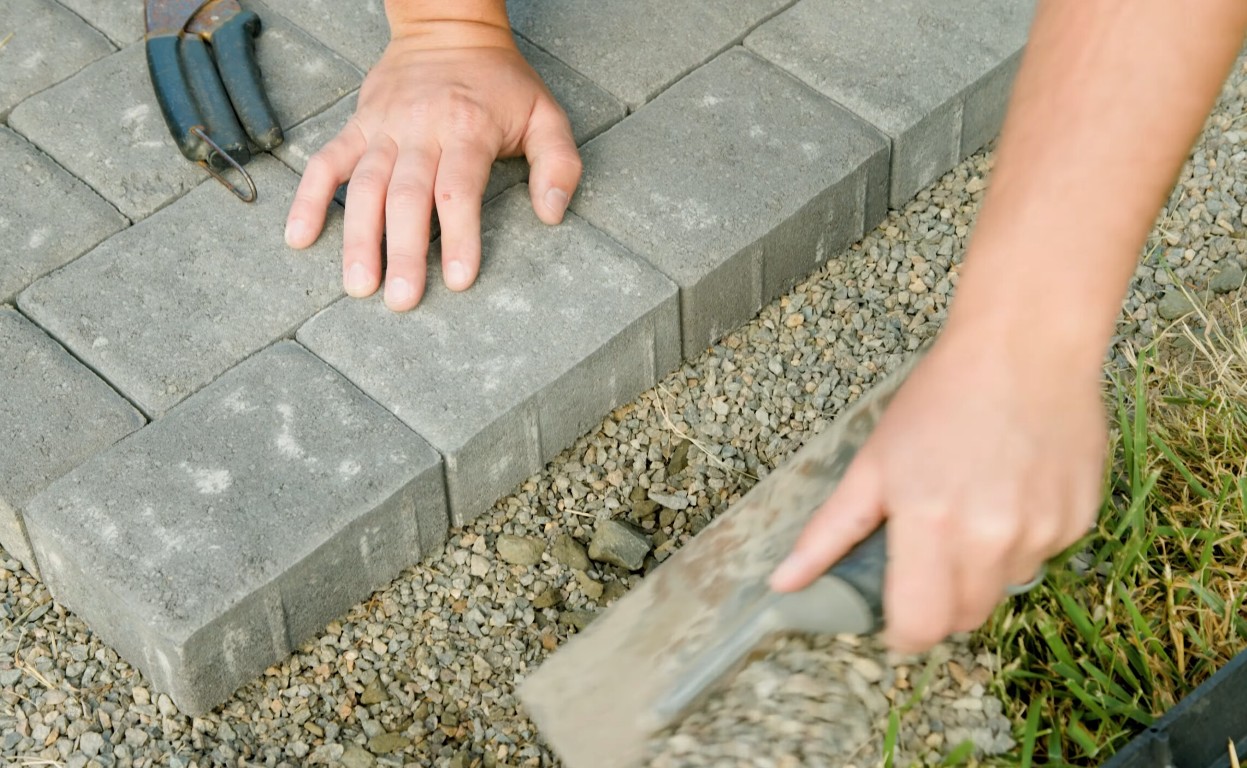
On top of the base, we add a leveling layer of sand that we screed perfectly flat. This is where precision matters. Even small variations will show up in the finished surface. Then we lay the pavers in your chosen pattern, cutting edge pieces as needed to fit perfectly.
The final step is sweeping polymeric sand into the joints between pavers. This special sand hardens when wet, locking pavers in place and preventing weeds and ant colonies. It's one of those modern innovations that makes paver projects way better than they used to be.
As Mobile's experienced masonry contractors, we follow industry best practices on every project. We're fully licensed and insured, and we stand behind our work with solid warranties. We also offer custom paver patios to create complete outdoor living spaces.
Walkways vs. Driveways: What You Need to Know
While the basic installation process is similar, walkways and driveways have different requirements that affect design and cost.
Paver Walkways
Walkways only need to support foot traffic, which means we can use thinner pavers and a less robust base. This keeps costs down while still giving you a beautiful, long-lasting path. Standard walkways are 3-4 feet wide, though we often go wider for main entries where you want two people to walk side by side comfortably.
Walkways are perfect for connecting your driveway to your front door, creating paths through gardens, or linking your house to outdoor living areas. You have more freedom to add curves, steps, and creative layouts since you're not dealing with vehicle traffic.
Paver Driveways
Driveways need to support vehicles weighing thousands of pounds, often parked in the same spot for hours. This requires thicker pavers (usually 80mm instead of 60mm) and a more substantial base with extra compaction. The investment is bigger, but you get a driveway that can handle daily use plus the occasional moving truck or delivery vehicle.
We recommend herringbone pattern for driveways because it distributes weight better than other layouts. The interlocking design prevents pavers from shifting under the stress of turning wheels and heavy loads. It costs a bit more to install because of the extra cutting, but it's worth it for the added stability.
For homes with challenging access or lots of trees, pavers beat asphalt hands down. Tree roots can't crack pavers like they crack asphalt and concrete. And if roots do lift a section, we can adjust it without tearing out and replacing everything. This flexibility is why retaining walls and paver driveways work so well together on sloped properties.
Common Questions About Paver Walkways & Driveways
How much does a paver walkway or driveway cost?
+
Paver walkways typically cost $15-25 per square foot installed, depending on the paver style and pattern complexity. A standard 4-foot wide, 30-foot long front walkway (120 square feet) would run $1,800-$3,000. Curved walkways or those with multiple levels cost more due to extra cutting and grading work.
Paver driveways cost $18-30 per square foot installed because they require thicker pavers and more substantial base preparation. A typical two-car driveway (about 400-600 square feet) runs $7,000-$15,000 depending on size, pattern, and site conditions. That's more than concrete upfront but less expensive over 20-30 years when you factor in maintenance and replacement costs.
Keep in mind that proper drainage work, removing old surfaces, and dealing with challenging grades can add to the base cost. The best way to get an accurate number is to schedule a free on-site consultation. We'll measure everything, assess site conditions, discuss your design preferences, and give you a detailed written estimate.
How long do paver walkways and driveways last?
+
Quality pavers installed correctly should last 25-50 years or more. Many paver manufacturers offer 25-year or even lifetime warranties on their products. The pavers themselves are incredibly durable because the color goes all the way through, so they won't fade or show wear like surface-colored products.
Compare that to concrete, which typically starts showing significant cracks within 10-15 years, or asphalt driveways that need resurfacing every 10-15 years and full replacement after 20-25 years. Pavers might cost more initially, but they're actually more economical over the life of your home.
The main maintenance is adding polymeric sand to joints every 5-10 years, which takes a few hours and costs very little. You might also want to seal pavers every 3-5 years to enhance color and make cleaning easier, though this is optional. Beyond that, occasional sweeping and hosing off is all you need.
Can pavers handle Mobile's weather and heavy vehicles?
+
Absolutely. Quality concrete pavers are rated for vehicle loads up to 8,000 pounds per axle, which covers pretty much any passenger vehicle, pickup truck, or SUV. We've installed paver driveways that regularly handle full-size work trucks, RVs, and even delivery vehicles without any issues.
Mobile's weather is actually easier on pavers than it is on concrete. Our occasional freezing temperatures can crack concrete when water seeps in and freezes. Pavers are designed to flex slightly with freeze-thaw cycles, which prevents cracking. And because there are joints between pavers, water drains through instead of pooling on top.
The heat and humidity don't bother pavers either. They won't warp like asphalt in extreme heat, and they won't develop mildew or algae growth like some concrete surfaces. The occasional heavy rain we get in Mobile just rinses pavers clean. They're honestly one of the best choices for our local climate.
Ready to Upgrade Your Walkway or Driveway?
Let's discuss your project and show you what's possible with quality pavers.